All posts by fgreenagel

Xanax and Valium Linked to Alzheimers Disease

In the 60’s, we started hearing reports that tobacco use caused cancer. Big Tobacco denied this. Reports are now coming in that links benzodiazepines (Xanax, Valium, Mick Jagger’s “Mothers Little Helpers”) to Alzheimer’s Disease. Nothing is conclusive yet, but the correlation is alarming.

The reaction to it is startling to. The power of denial continually amazes me.

Here is a link in The New York Times to the study links anxiety drugs to alzheimers disease.

Governor Christie Must Walk His Big Talk

When Governor Christie took office in 2010, it was the first time that NJ had a Republican Governor since Governor Whitman resigned in 2001 in order to head up the EPA under President Bush. Christie had been the US Attorney for NJ, so I was not expecting much out of him in the areas that I have the most expertise in: education, criminal justice, and mental health and addiction treatment.

Early on, there were promising signs. In 2011, Eric Arauz and I were named to the Governor’s Council on Drug Abuse and Alcoholism. We were told that Christie had once served on the Board of Directors for Daytop Mendham, an adolescent in-patient treatment facility in Morris County. Apparently a young man who had graduated from Daytop had moved Christie with his story of addiction to crack and how he attended college and then law school in recovery. In 2012, the GCADA put together a Task Force to investigate the heroin and opiate epidemic (after a lot of political nonsense and delay, our report was released in March of 2014).

In July, 2012, Governor Christie signed a bill into law that expanded the NJ Drug Courts. It costs $55,000 to incarcerate someone in NJ but only $12,000 to put them on drug court and give them treatment. Treatment is better than punishment, and even if you don’t agree with that statement, it comes in at about 22% the cost. Even though I disagreed with the Governor on a number of issues, I was thrilled that he had taken action on addiction treatment. It was helpful that he was a Republican and a former US Attorney; if a Democrat had pushed the Drug Court expansion she would have been viewed as a bleeding heart liberal and soft on crime. Christie could do it and not have to deal with much political or public backlash.

After a few months, I heard rumblings that even though Christie had signed the bill, he hadn’t provided actual funding for it. I was told that it was an old political trick: publicly supporting something and then not funding it. I was getting an interesting education in Trenton. I was discouraged, but I hoped that the Governor hadn’t just funded it yet, and that once he addressed the state’s budgetary issues he would pour money into prevention, treatment and recovery support services.

The first sign of real trouble appeared in the fall of 2012, when Christie vetoed the Good Samaritan Bill, which would have helped prevent a number of overdose deaths. He vetoed it despite the impassioned pleas of hundreds of parents of kids who had died from overdosing (in 70% of overdose deaths, the evidence at the scene shows that people were not alone when they died, but no one called for fear of getting into trouble). Policy makers and those parents were distraught and sought to create a groundswell at the local level. Websites were made, petitions signed and municipalities passed proclamations in support of the Good Samaritan Bill. Christie refused to budge. Then, Jon Bon Jovi’s daughter overdosed at Hamilton College in upstate New York. Because New York had already passed their Good Samaritan Law, Ms. Bon Jovi did not die. Advocates called on Jon Bon Jovi, who agreed to reach out to the Governor. On May 2, 2013, Governor Christie announced that he had “changed my mind” and signed the Overdose Prevention Act.

My father is an Eisenhower Republican and my mother has usually voted for Republicans. I tend to like moderate Republicans (Governor Tom Kean, President Nixon, President Ford, John McCain circa 2000), but they are a highly endangered species. I hadn’t voted for a major Republican candidate in well over a decade, but decided to cast my vote for Governor Christie in the fall of 2013. He talked a good talk about addiction. I was hoping that he would walk it.

This spring, he spoke before a group of doctors and urged them to use the state’s PMP. But he wouldn’t require doctors to use it, despite the fact that our Task Force report suggested it (at the behest of his Attorney General’s office) and that nine other states had mandatory PMP’s. A few days later, Christie met with a number of ex-offenders whose lives had been improved by going to college. Studies show that providing a college education reduces recidivism by more than 50% and therefore, makes a tremendous amount of economic sense. Christie said that it was a great idea but that he would not publicly fund it (I don’t hold this against him…it is extremely difficult for a politician to back this with public funds). The Governor had developed a new playbook that had him make appearances, talk about how he cared about the issue, that he was rooting for people and then he would leave without any promise of making any real change or providing funding.

Despite this, I was (for the most part) pleased with his stance on marijuana. I am very much opposed to outright legalization and I’m appalled at how Democratic officials are supporting legalization without a better understanding of the issues.

Last week, Senator Joe Vitale of Woodbridge introduced 21 new bills to tackle the heroin and opiate epidemic. Some highlights:

(1) mandate the PMP

(2) improve middle and high school curriculums to address prescription drug abuse

(3) insurance reform

(4) create treatment programs inside of NJ prisons

(5) improve oversight of treatment programs to ensure better service

(6) require all NJ colleges to have Recovery Housing programs

These are good ideas. Passing and funding them can go a long way to addressing the Heroin epidemic in NJ, as well as a improving substance abuse prevention and treatment. Governor Christie has deservedly earned a lot of praise for his stance on these issues. He talks a good talk and says all the right things. He connects with people and claims to care. But when it comes time to pass laws and fund programs, he comes up lacking. Over and over.

This is his moment. I hope he chooses wisely. Governor Christie: please walk your big talk.


It’s Time To Shut Down Fraternities and Sororities

On Sunday morning at 3:19 am, Caitlyn Kovacs, a 19-year-old sophomore at Rutgers died after going to a “small gathering” at the Delta Kappa Epsilon (DKE) Fraternity House on College Avenue in New Brunswick. Nothing has been confirmed yet, but the speculation is that Ms. Kovacs died of alcohol poisoning. Over the next few weeks, we will see a renewed discussion about the dangers of college drinking and what can be done to address a problem that has gone on for centuries.

In 1997, The Harvard Crimson published a high-profile history of on-campus alcohol deaths. One of those incidents involved a Rutgers student in 1988:

James Callahan, an 18-year-old Rutgers University student, dies after consuming 24 ounces of hard liquor in less than an hour as part of a pledging ritual at the Lambda Chi Alpha fraternity, according to an April 26 article in The Record. A separate article reported on Aug. 28 that this incident prompted a five-year shutdown of his fraternity.

Ten years later, during my sophomore year at Rutgers, another Fraternity student died in an alcohol-fueled incident:

A Rutgers University junior who suffered serious head injuries when he fell down a flight of stairs at his Fraternity house after several hours of drinking at an off-campus bar was removed from life support early yesterday. Jason Greco, 20, a Riverton native and former captain of the Palmyra High School football team, was declared clinically dead Sunday morning at Robert Wood Johnson University Hospital in New Brunswick.

The article, which I’ve linked to on the young man’s name, has a number of familiar quotes and brings up some disturbing points:

As family and friends mourned Greco’s death yesterday, the accident brought attention once again to how tightly alcohol is woven into the fabric of college life. Despite alcohol prevention and education programs offered at Rutgers and other universities in the region, the level at which college students consume beer and liquor continues to concern administrators.

“We have long recognized that underage drinking and dangerous drinking has been an issue that colleges face,” said JoAnn M. Arnholt, dean of fraternity and sorority affairs at Rutgers. “I hope people learn a lesson from this, that no one is immune from an accident like this.”

Rutgers is requiring all fraternity houses to be substance-free by 2000. Rutgers administrators said Greco’s death had forced the school to continue to scrutinize whether its policies are allowing students to fall through the cracks, and whether its policies can prevent tragedies such as the death of Greco.

Three students died in alcohol and fraternity related deaths. Each time the student was mourned by friends and family and the college culture of drinking was cited as a difficult problem to address. College administrators expressed concern. Clearly, Rutgers failed in making fraternity houses substance-free by 2000. These stories read like Groundhog Day on deja vu steroids.

After Mr. Greco died at Rutgers in 1998, Rutgers told the Fraternities that they had to remove the bars from the Frat-House basements. The New York Times reported that:

One fraternity, Alpha Delta Epsilon, has challenged the university’s order, contending that it should be exempt. Its alumni president, Matthew R. Schutz, a lawyer from Flemington, N.J., believes the fraternity’s bar should be retained because the fraternity’s alumni have deemed it a memorial to members who have entered government service, or the fraternity should be compensated for its loss.

The Fraternities didn’t get it then, and they don’t get it 25 years later. Mr. Schultz’s claim was as farcical as it was short-sighted and irresponsible.

In 1989, The New York Times ran a story about how Rutgers had created a number of positive programs to address the drinking culture, including (1) the presence of the Center of Alcohol Studies, one of the premier research institutions in the world; (2) the Rutgers Recovery House, the first on-campus recovery house program in the world; and (3) outpatient counseling services available at the on-campus counseling center.

Despite the presence of these avant-garde programs, alcohol and drug problems keep erupting out of Fraternity and Sorority Houses at Rutgers. This also holds true around the country. Members of Greek Life argue that they request annual training on alcohol and drug problems, but former Rutgers Vice-President W. David Burns had this to say about that:

Mr. Burns added that education and awareness programs are sometimes requested disingenuously by student groups to make it appear that they are concerned with curbing their drinking habits.

Nationwide, the yearly statistics related to college drinking are staggering and harrowing:

– Approximately 1,800 student deaths
– 600,000 unintentional injuries
– 700,000 assaults (100,000 sexual assaults)
– Lower grade point average
– 31% met criteria for alcohol abuse or dependence
– $53 billion social cost for underage drinking
– 100,000 students report having been too intoxicated to know they consented to having sex

College drinking and curbing Fraternity life has been in the news this week, even before Ms. Kovacs died at the Rutgers Fraternity yesterday. On September 16, NPR ran a story about how Frostburg State University is trying to combat underage and binge drinking on campus.  FSU has extra police working on the weekends and they have paid for off-campus bar workers to learn how to better spot fake ID’s. They have also increased the number of Friday morning classes and have doubled the number of alcohol-free events offered on campus during traditional drinking hours.

Today, Wesleyan University announced that it was putting an end to all-male Fraternities. Disappointingly, they are only forcing them to admit women rather than completely shutting them down. This move was made of because of the high number of alcohol-related problem-incidents and the “rape parties” that the Fraternities have held on campus over the last few years.

Schools should offer more alcohol-free events and continue to work on changing the culture with PSA’s and social norms campaigns, like RU Sure. But there is a bigger step to be taken. Wesleyan is on to something, but they need to take the training wheels off of their plan.

Fraternities and Sororities, which make up Greek Life, contribute to a huge number of significant problems on campus without bringing much to the table. Before a Greek Life supporter cites the charity work that they do, I’d like to point out that Donald Sterling donated a lot of money to the NAACP and that Philip Morris donated money to teenage anti-smoking ads. Ray Rice will probably end up taking part in Domestic Violence Awareness messages. Whatever good that Greek Life adds to the school is disproportionately offset by the tremendous negativity, irresponsibility and flat out harm they inflict upon the rest of the student body.

The Greek Life hit list (please click on each link):

(1) They are bastions of sexual assault. Google search college fraternities and sexual assaults and see what comes up. Sexual predators in those Frats have weaponized alcohol and drugs.

(2) They hold racist parties. Partygoers are encouraged to dress up as Asians at Duke University, Mexicans at Randolph Macon, and black thugs at Arizona State on Martin Luther King Jr.’s birthday.

(3) They have fought integration. It was only in the last year that the University of Alamba Greek chapters finally integrated.

(4) They haze people. Again, another horrible story out of my Alma Mater from 2010: “At Rutgers, six members of Sigma Gamma Rho were arrested in January and charged with aggravated hazing, a felony, after a pledge reported that she had been struck 200 times over seven days before she finally went to the hospital, covered with welts and bloody bruises.”

(5) They are often involved in cheating scandals.

(6) Women are sexually objectified. Even more so than is typical in American culture.

(7) Despite sexual objectifying women, they “slut shame” non-Greek women and hold them to a different standard.

It’s time to end the horror that is perpetrated by the Fraternities and Sororities on the rest of the student body. You want progress. Shut them down.


Do Employers Have The Right to Screen Employees For Drugs?

Yes. They do. But…with recent legislation in Washington and Colorado, that might change.

I think one would be hard pressed to find a business owner or manger who doesn’t have concerns about the performance (not to mention the attendance or quickness) of employees on drugs.

Here is a fascinating article about a man in Colorado who had a legal, medical marijuana prescription but was fired in 2010 for having a positive urine screen for marijuana. He explained his situation to his employer, but his employer maintained that they have the right to enforce a drug free work zone. Additionally, his employer stated that if they don’t maintain a drug free work zone, they are in violation of federal law. The case will go to the Colorado Supreme Court on September 30th. It’ll be interesting to see what happens.

You can read more about it in the New York Times: Legal Use of Marijuana Clashes With Workplace Testing.

Clearly, I think businesses should have the right to screen for drugs and deny employment to someone who tests positive and does not want to go to treatment for it.

Why I Rejoined the United States Army at age 38

When I was 19 years old, I signed an eight year contract with the United States Army. I went to basic and advanced training at Ft. Knox, KY and studied to be a tanker on the M1A1 Abrams Tank. I was our platoon leader throughout basic and earned an Excellence in Armor award. I eventually went home and served in the NJ National Guard. I drilled at Ft. Knox, Ft. Drum and Ft. Dix. In 1999, I received the Army Achievement Award. In 2001, my unit was activated a few weeks after 9/11 and we were sent to guard the Hudson River crossings (Holland, Lincoln, Path and the GW) during a time of great national mourning and anxiety. Afterwards, I desired to travel abroad and get further schooling, and I was granted my Honorable Discharge in 2004.

There were a few individuals I really liked (Drill SSG Moses, Drill SFC McCottrell, MSG Spadoni, SGT Geleta, Cadet Tese, Major Manfre) and a number that I was less enthusiastic about. There were good things and bad things about the military. I felt a great sense of pride in serving in the same branch as Washington, Grant, Sherman, Roosevelt, Eisenhower, Patton and Robinson. I enjoyed wearing the uniform, but wasn’t thrilled about shaving or shining my boots (my other likes and dislikes are unimportant and best kept to myself).

The Army served me well. I know that it made me more organized and more adaptable, and people that interviewed me tended to value it. I used my GI Bill to pay for part of my undergraduate degree and I bought a house with a VA Loan. When I became a therapist, I found that veterans usually felt comfortable speaking to me. During my five years at Rutgers CAPS and the Rutgers Newark Counseling Center, I worked with a decent amount of veterans. I enjoyed talking with them, encouraging them and helping them in whatever ways I could.

———-

One of my students at Rutgers was a Marine who served in the Middle East. While over there, he experienced a great deal of trauma. He had trouble sleeping and was diagnosed with PTSD. The unit doctor prescribed him with Xanax and Oxycotin. He was able to sleep better and return to the field, for a time. Eventually, he became addicted and was discharged under other than honorable conditions (those with an other than honorable discharge are usually denied various VA benefits). My student returned to NJ and quickly moved on from pills to heroin. He ended up on the streets of Paterson. He almost died. He went to some NA meetings and eventually got clean. He returned to work and became an electrician. After doing that for a few years, he decided to go back to college. He went to a community college and graduated with a 4.0. Last fall, at seven years clean and sober, he transferred to Rutgers to further his education. A few days before he was supposed to move in, he decided that he did not want to live with three 18 year olds whose notion of college probably differed from his. He made the decision to commute from Paterson each day. That commute took 80 minutes each way; by mid-October, it had taken its toll. The Marine contacted the Rutgers Veterans’ House and spoke with Col. Stephen Abel who sent him to me. He told me his story and that he was looking for a safe place to live on campus. Normally, I would interview students two to four times and spend 30 to 60 minutes with them each time before deciding whether or not to accept them into the Rutgers Recovery House. Ten minutes into his story, I told him “to shut up and get your things. You can move in immediately.”

He moved in within the next couple of days and the other students, despite being, on average, over a decade younger than him, took to him. He was a likeable role model. In December, I had him speak before the Governor’s Council on Alcoholism and Drug Abuse. After he told his story, Council members asked him a number of questions. He told them that his story was common and that many of his fellow Marines were discharged under similar circumstances. He described sub-par treatment and non-existent therapy. The Council was aghast.

Over the next few days, I called a number of Army bases and talked to a variety of commanders and medical officers. I offered up my services as a national expert on addiction and recovery issues and told them that I was an Army veteran. I was told that the Army almost never employed outside trainers. I called my friend and college roommate, Captain Gabriel Tese, an Army lawyer currently serving at Ft. Hood, Texas. He told me that my student’s story was common and that a majority of the cases he prosecuted involved soldiers with substance abuse problems, and that prescription drug abuse was a massive issue. Eventually, I talked to an active duty Colonel who said, “How old are you son?”

I told him that I knew where his question was leading and that I wasn’t interested.

“You are interested. This is an issue that you care about and that you are able to do something about. If you are as good as you say you are, you can make a real difference. The Army will be good to you and for you.”

I thanked him and hung up the phone. Two days later, I went down the rabbit hole and read about the Army Medical Corps and the position of Behavioral Science Officer.

———-

Back in May, I wrote about how America Fails Its Veterans. America also fails her active military personnel: those with PTSD, traumatic brain injuries, prescription drug addictions, alcohol dependence or other problems are often given sub-standard care. In 2007, the scandal at Walter Reed Hospital dominated the news for more than a few cycles and it seemed that America might turn the corner on how it treated members of the Armed forces. Then we saw this VA scandal in 2009 and this one in 2014. Despite aggressively wearing flag pins and sending troops into war zones, the Republican party (again) voted down benefits for military personnel and veterans in 2014. Soldiers and veterans are ubiquitous at professional sporting events, and the crowds always stand and cheer for them when they walk onto the field or appear on the jumbo tron. That tends to be the extent of the support they get from the public, aside for some Facebook appreciation and hashtag activism. People need to do more than say “thank you for your service,” cheer for veterans during sporting events or share a meme on Facebook (I don’t want to minimize these things though. They are helpful gestures and are appreciated. We just need to do more). We need them to tell their Congressman to vote for more military and veterans benefits, like basic, timely medical service.

The aforementioned Colonel told me that the military also needs highly trained professionals to give of themselves and their unique abilities. They need doctors, nurses, social workers, psychologists and members of the clergy to support the troops.

I have my hands in many things, a lot of work obligations and a large number of hobbies that I like to partake in. I’ve already served in the military. I can make more money doing other things.

If not me, than who? If not now, then when?

———-

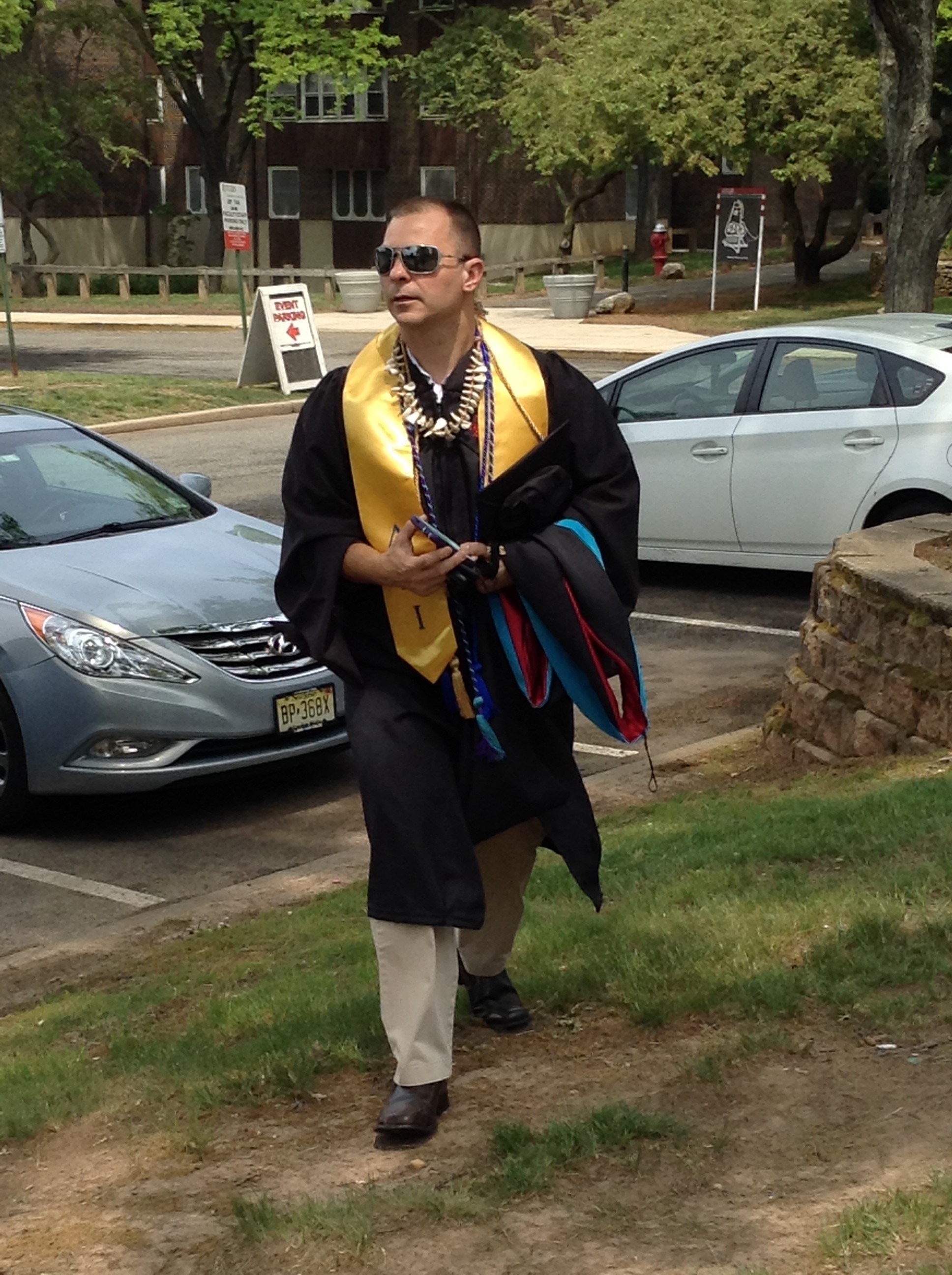
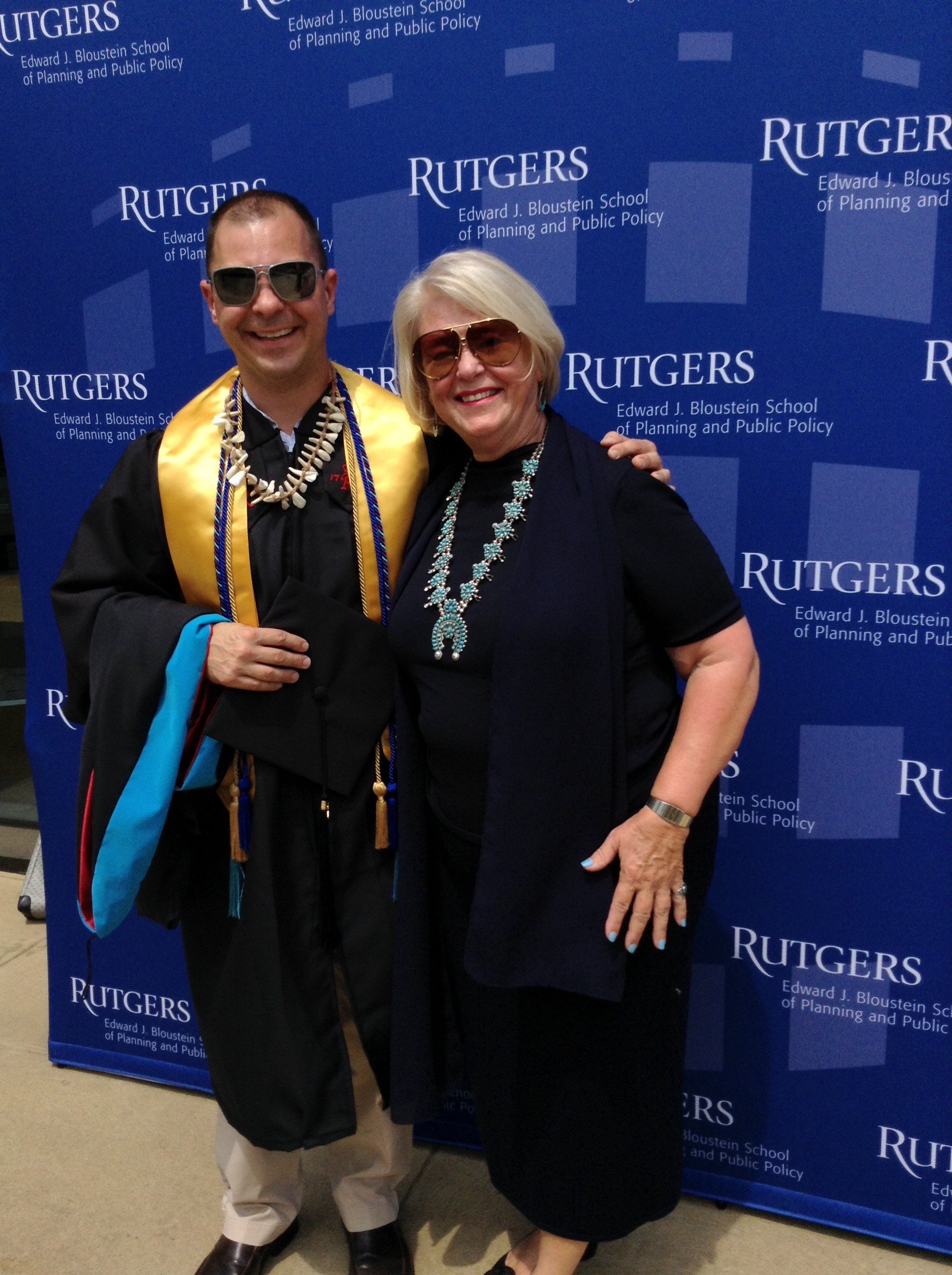
On August 29, 2014, I rejoined the United States Army as a First Lieutenant. My old friend, college roommate and fellow guardsman, Captain Gabe Tese swore me in. The brief ceremony was performed on the Rutgers campus next to the WWII and Vietnam memorials. My Dad, wife and a few friends bore witness. Most significantly, that Rutgers Marine who caused all of this was there too.

I will serve as a Behavioral Science Officer in the Pennsylvania National Guard. Of course, I will help whomever I can that suffers from PTSD and/or substance abuse problems. But I also plan on helping soldiers with other aspects of their lives and encouraging those of all ages to go to college, whether it is veteran friendly schools like Rutgers or somewhere else.

I’ve thrown my hat back in the ring. I hope others will follow.

2014 0830 Army (3)
Captain Tese and me, shortly after the ceremony on Voorhees, Mall, Rutgers.

Vicodin (and all other forms of Hydrocodone) Becomes a Schedule II Drug

Great news from the DEA. In 45 days, all forms of Hydrocodone will be reclassified from Schedule III to Schedule II. Its most common forms are Vicodin and Norco. A few years ago, Vicodin became the most prescribed drug in America. Not only is it highly prescribed, but it is also highly abused (and easier to get than schedule II painkiller and superking, Oxycodone). Drug users only complaint about it is that it is weaker than Oxycodone, so they just take larger doses of it.

In 2012, rumors about Zohydro’s introduction to the market started to float out of the mainstream press. Drug companies liked the idea of selling Zohydro because it is 10x as strong as regular Vicodin. This caused a great deal of concern and consternation among addiction treatment providers and some doctors. The FDA approved the drug for release in 2014, and almost immediately 29 states filed a complaint with the Federal Government. The approval of this drug by the FDA was incongruous with their statement in 2013 that Hydrocodone was dangerous and highly abused and should be moved to Schedule II.

The DEA Schedule of Drugs can be viewed here, but I’ll list them from their website. Clearly, there is a big difference between Schedule II and Schedule III (key parts bolded by me). It’s not a major victory that will cause a sea change in drug use, misuse, prevention or treatment, but it is a sound policy. Good job, US Government.

Schedule I

Schedule I drugs, substances, or chemicals are defined as drugs with no currently accepted medical use and a high potential for abuse. Schedule I drugs are the most dangerous drugs of all the drug schedules with potentially severe psychological or physical dependence. Some examples of Schedule I drugs are:

heroin, lysergic acid diethylamide (LSD), marijuana (cannabis), 3,4-methylenedioxymethamphetamine (ecstasy), methaqualone, and peyote

Schedule II

Schedule II drugs, substances, or chemicals are defined as drugs with a high potential for abuse, less abuse potential than Schedule I drugs, with use potentially leading to severe psychological or physical dependence. These drugs are also considered dangerous. Some examples of Schedule II drugs are:

cocaine, methamphetamine, methadone, hydromorphone (Dilaudid), meperidine (Demerol), oxycodone (OxyContin), fentanyl, Dexedrine, Adderall, and Ritalin

Schedule III

Schedule III drugs, substances, or chemicals are defined as drugs with a moderate to low potential for physical and psychological dependence. Schedule III drugs abuse potential is less than Schedule I and Schedule II drugs but more than Schedule IV. Some examples of Schedule III drugs are:

Combination products with less than 15 milligrams of hydrocodone per dosage unit (Vicodin), Products containing less than 90 milligrams of codeine per dosage unit (Tylenol with codeine), ketamine, anabolic steroids, testosterone

NJ gets a Recovery High School

Photo taken from a Star Ledger article in March, 2014 that covered the NJ Heroin & Other Opiate Task Force Report. This photo is of a girl at the Bridgeway Recovery School in Philadelphia.

This fall, NJ will finally get its own Recovery High School. That school is the Raymond Lesniak ESH Recovery High School and it will be located this year at Kean University in Union County. It is open to students throughout NJ.

A Recovery High School is exclusively for kids that have substance abuse or substance dependence. Many of the students enroll voluntarily, while others are coerced by their parents or the authorities (this is ok…people can get sober through coercion). Every member of the staff, faculty and administration in each school has to attend numerous trainings regarding addiction and recovery. There are lots of social, academic and counseling supports available to the students. More and more kids are going to treatment each year (although the length and quality of that treatment is often a concern), but foolishly, those kids are usually sent back to the exact same school and home environment that hastened their demise in the first place. It’s a poor public policy.

There are currently over 30 Recovery High Schools in America. Minnesota has many of them and Massachusetts has three of them (one of my favorites is the North Shore Recovery High School, which was covered in a great article on MSNBC back in 2012). NYC, despite a vigorous effort to create one, does not have one. Most of the Recovery High Schools are members of the Association of Recovery Schools, which has had an annual conference since 2000.  This year, ARS has begun to come up with criteria and standards for what makes a quality Recovery High School.

From 2010 to 2012, I was one of eight Founders of the New Day Recovery Charter School in Newark, NJ. The group was led by Marc Wurgraft of YCS and was made up of board members from the New Hope Baptist Church, Rutgers, YCS and the Newark Public Schools. We met every Monday for two years, won a $500K federal start up grant, hired a principal, developed policy and looked for a site. In 2011, we were ordered to take the “Recovery” out of the name and agreed to be called the New Day Charter High School. It was a frustrating blow, but we heeded Ben Franklin’s words that “Half a loaf is better than no loaf” and kept moving forward. At the end of June, 2012, we were informed that our charter was again denied and the Board voted to disband. It was heartbreaking. We were met with obstacles and roadblocks from various institutions in Newark, the Department of Education and Governor Christie’s office (I’m sure that they will all deny this). Later, I learned that the Division of Youth and Family Services tried to put together a Recovery High School in the early 2000’s and met similar opposition before giving up.*

Some of the particularly galling aspects of all of this are:

(1) I have spoken around the state about how we spend $10K to $30K a month on in-patient substance abuse treatment for teenagers only to send them back to the same schools

(2) 93% of those kids are offered substances their first day back in school

(3) and most of them are using at the same rate they were before treatment after a few months

(4) People nod their heads and say, “I’m with you” and “A Recovery High School makes perfect sense”

(5) but when it comes time to fund it or put it in someone’s back yard, everyone turns their backs.

That is why I am so thrilled and pleased that Prevention Links has joined together with State Senator Lesniak to finally create a Recovery High School in NJ. The Executive Director of Prevention Links (and key figure in pushing this thing forward) is Pam Capaci. She can be reached at pcapaci@preventionlinks.org and you can donate money to the school here. The Rutgers Recovery House has agreed to send successful students in sustained recovery up there to volunteer at the school, speak to the students, be role models and even sponsor students who have made a commitment to recovery. Hopefully, some of the graduates of this new Recovery High School will find their way to Rutgers and other institutions of higher learning in order to further their education and recovery.

Back in March of this year, the NJ Heroin & Other Opiate Task Force released our report. One of our suggestions was that NJ needs a Recovery High School. Ron Susswein, a Deputy Attorney General in NJ, and I co-wrote the following passage:

Even in the best of circumstances, drug rehab is not easy. It is even more difficult when adolescent addicts must also endure the normal stresses associated with school. In 2004-2005, 37,790 New Jersey students were referred to a school-based program or outside service for reasons related to the use of alcohol or other drugs (excluding smoking cessation). Studies indicate that the prognosis for students who complete a treatment program is poor, with relapse rates as high as 85% upon returning to school.

The problem lies not in the quality of the treatment services that were offered, but rather in the nature of the environment that school-aged recovering addicts must return to. According to Dr. Dale Klatzer, President and CEO of the Providence Center – a community behavioral health organization in Providence, Rhode Island – 93% of students who return to their high school are offered substances on their very first day back at school. Dr. Klatzer also reported that within 90 days of returning to school, 50% of the students who have gone through treatment are using substances at levels at or above where they were prior to treatment. Most of those who relapsed did so within the first month out of treatment.

There is a growing body of evidence that relapse rates can be greatly reduced if recovering students had the opportunity to attend a “recovery school” – a small supportive community that fosters an environment within which these students feel safe. At such institutions, students would not be stigmatized by their addiction. They would not be outcasts, and they would not be pressured by other students to return to active substance abuse. To the contrary, the conclave of students sharing the experience of recovery would become a natural support group, encouraging sobriety.

Thomas Kochanek, a Rhode Island college professor, conducted a study of the three recovery high schools in Massachusetts. He found that after five years, 80% of the students had maintained a commitment to their recovery and that a majority of students earned a B average or higher. Twenty months after graduation, 90% of the students were either enrolled in college or were employed.

Despite the research that shows the potential effectiveness of recovery schools, past efforts in New Jersey to replicate this model have not been successful. Notably, those who have attempted to start a recovery school have run into legal problems in trying to fit the recovery school model into our statutory and regulatory framework for “charter schools.” Those efforts were also met with skepticism by officials who questioned the need for such educational programs. As noted throughout this report, denial of a substance abuse problem can paralyze many things, including the incentive to innovate.

Given the exponential increase in prescription drug abuse, we believe that local authorities can no longer deny the dimension of the problem and the need for action. At the very least, the idea of establishing a pilot recovery school in this State is worth discussing, not just to save lives, but also to conserve resources and save taxpayer dollars. If the successful institutions in Massachusetts could be replicated here, we could reduce the strain on the juvenile justice system, cut down on the cost of repeated treatment, and increase high school graduation rate

_____________________________________________

* Education in NJ is a mess, especially in Newark. I can’t suggest this article from The New Yorker enough. It details the public school and charter school fights that have taken place in Newark over the last 4 years and how Governor Christie and then Mayor-now-Senator Booker were both ultimately failures in reforming any of them. It all reminds me of this clip.

_____________________________________________

Addendum (8/24/2014)

This research report did a nice job and found the following:

Retrospective pretest to post-test analysis suggests significant reduction in substance use as well as in mental health symptoms among the students in recovery schools. Students were very positive in their assessment of the therapeutic value of the schools, but with less enthusiastic but positive ratings of the educational programs. The school programs do appear to successfully function as continuing care to reinforce and sustain the benefits students gained from their treatment experiences.

______________________________________________

Addendum (10/1/2014)

The school held its opening ceremony yesterday and is scheduled to open on November 1, 2014.

Rutgers: The Birthplace of College Recovery

DSC_0448
An alumnus and student during the 2012 Alumni vs. Students Recovery Softball Game.*

My last day as the Recovery Counselor at Rutgers was on July 31, 2014. Six weeks earlier, I informed my bosses, Lisa Laitman and Polly McLaughlin, that I would be leaving Rutgers at the end of July in order to pursue a few other opportunities (I will be writing about some of them in the very near future). The Rutgers Recovery House is both the prototype and the paragon of recovery programs on college campuses. Over 600 students have lived in Recovery Housing since 1988. During my five years at Rutgers, I organized (and attended) 571 activities. It is my strong belief that people in recovery need to fill their time and have fun. At Rutgers, we do that better than anyone else. 571 activities in 5 years. That’s 114.2 a year that were attended by a licensed staff member.


DSC_0018
Lisa Laitman, me and Polly McLaughlin while setting up for the 2014 Rutgers Recovery Graduation.*

Rutgers is known as the birthplace of college football (whatever). It really should be known as The Birthplace of College Recovery. It started with Lisa when she created the Alcohol & Other Drug Assistance Program (ADAP) in 1983 and had the uncanny vision to create the first Recovery House on (or near) a college campus in the world in 1988.

I could easily write 20,000 words about Rutgers, Lisa, the Recovery House and the amazing people that have gone through the program, stayed sober and built incredible lives (I’ll save that for the book though). Instead, I’m going to link to my five favorite articles about the Rutgers Recovery House from the last five years, share a few bits from my farewell letter to Rutgers staff and show a couple of pictures. I would like to post some pictures of my students, because they would show you the joy that can be attained when someone recovers and then turns around and helps others. Alas, I need to protect their anonymity.

Without further ado:

(1) I wrote Building a Campus Recovery Community for Addiction Professional in the spring of 2011. It details the history of the Rutgers Recovery House a little and discusses our activities and alumni a lot.

(2) The Next Big Step In Recovery was published by Rutgers Today after the 2011 Recovery Graduation. It captured the mood and spirit of the ceremony very well. If you haven’t been to a Rutgers Recovery Graduation and this is something that you care about, you should move mountains in order to attend one some day. The 2015 graduation will take place on May 19.

(3) In the fall of 2011, a New York Times reporter told me she was doing a story on addiction and recovery on college campuses and that she would like to include Rutgers in it. I urged her to visit Rutgers and meet with our students. The piece was originally supposed to describe about a dozen different schools, but after her visit to Rutgers, the author wrote basically a feature on our program and mentioned the other schools in passing. Lisa felt bad for them, but I was proud and unabashed. I know what we have. The story was published in January, 2012 and was titled A Bridge to Recovery.

DSC_0029
Ben’s mother presents him at the 2014 Rutgers Recovery Graduation.*

(4) Ben Chin is one of our super-duper stars and has worked publicly as an advocate for several years. He has a difficult backstory and acknowledges the mistakes of his youth. He graduated from Rutgers with a 3.9 in 2014 and won both the Truman and Luce Scholarships.

(5) In 2002, my close friend Fraser died. His death partly pushed me into this line of work. Rutgers did a wonderful piece on what it was like to lose him and weaved it into a narrative about how students in the Recovery House overcome these type of challenges. You can read about it here.


Below are two paragraphs from my goodbye email that I wrote to Rutgers staff. I’m happy to share them here.

I'm a kid from Rutgers. I arrived at the banks in the fall of 1997 fresh out of the Army and had 4 wonderful undergraduate years here. I met Lisa early on, and she introduced me to Gail Milgrim at the Center of Alcohol Studies. Gail gave me a scholarship for the 1998 Summer School of Alcohol Studies and thus began my career path. I graduated in 2001 and then returned for my MSW in 2004. I graduated from that program in 2006 and then returned to work at CAPS in 2009. My time at Rutgers isn't over though, as I am finishing up a Masters in Public Policy this December. I will also continue to teach at the School of Social Work and at the Center of Alcohol Studies. 

Writing about Lisa is extremely difficult. I've gotten a lot of attention and compliments over the years for my work at Rutgers, and it has led to a number of other opportunities. Taking students out for activities and hanging out at the Recovery House late at night was a tremendous amount of fun for me - I was basically paid to be me. I am fully aware of my abilities, but I could have never created ADAP or the Recovery House. Lisa was the perfect person at the right time. I am continually impressed by her work with students that are resisting treatment and recovery; again, she does things that I cannot do. The Recovery House was the first program of its kind on a college campus in the world. Since 1988, a lot of other schools have created programs, many modeled on Rutgers. No one measures up (although I do like Augsburg in Minnesota). I decided to work at Rutgers in 2009 because I wanted to be a part of something so incredible and so unique, and I knew that it would provide a number of opportunities for me at Rutgers and beyond. Without the Recovery House, I wouldn't have been named to the Governor's Council, Chaired the Opiate Task Force, been hired to train people around the country or gotten my latest trio of opportunities. In short, I owe Lisa my career. Thank you Lisa.
I wore a pink bunny suit (from A Christmas Story) while singing at the 2013 Recovery Karaoke event. I wanted to show students that one can take themselves less seriously.

Fitting movie clip: You’ll Never Have To Say ‘Thank You’ (for the work I did at Rutgers)

Fitting song: Time of Your Life

__________________________________________

* if you click on the pictures, they’ll get larger (except for the bunny suit)

** you should listen to the song while looking at the pictures


There is a smart person in Colorado

Gov. Hickenlooper’s office has put together a clever and in-your-face campaign to alert teenagers to the dangers of marijuana. Human size lab-rat cages are being placed at skate parks, libraries, professional sporting venues (Coors Field to start), concert locations (Red Rocks) and other public places.

I think it is a fantastic campaign. To learn more about it, click here to read today’s article in The Washington Post.

(incidentally, I’d like to see this kind of ad campaign go nation wide and also be used for prescription drugs…which would make Big Pharma absolutely crazy)


Sleep Problems: 32 Suggestions to Improve your Sleep

Sleeping problems effect somewhere between a significant amount of the adult population. Sleeping problems include the following: insomnia, sleep apnea, movement syndromes and in rare cases, narcolepsy. This article will focus on the various types of insomnia, what causes & aggravates it, and 32 suggestions to combat it. I’ll touch upon some unique ways colleges are dealing with sleep issues.

Insomnia

Insomnia is a too-oft ignored mental health and medical issue. Dr. Dan Blazer of the Duke University Medical Center, said, “Insomnia may predispose people to anxiety and depression, just as anxiety and depression may predispose people to insomnia.”  Additionally, people with insomnia are more likely to have medical issues, and people with medical issues are more likely to suffer from insomnia. The four major types of insomnia are:

(a)   Can’t fall asleep (initiation)

(b)   Wake up in middle of the night  (maintenance)

(c)   Sleep isn’t restful or restorative  (quality)

(d)   Can’t get enough sleep (duration)

Just having one of these symptoms means that one has insomnia; if someone has two or more of these symptoms, then their insomnia is more pervasive and debilitating. Insomnia effects people in three different time categories: transient (lasts less than a week); short term (one to four weeks); and chronic (more than a month). Transient and short term insomnia are often caused by temporary sickness, stress, jet lag or a schedule change. They tend to work themselves out. The major concern here is chronic insomnia. Chronic insomnia can be caused by the following:

(1) Adjustmental insomnia  (triggered by current stress). There are many kinds of adjustmental stressors that can cause insomnia. Work, academic, familial, financial, romantic and medical concerns can all lead to difficulties in falling asleep (initiation) or staying asleep (duration).

(2) Due to substance use/withdrawal (alcohol, nicotine, caffeine, marijuana, stimulants, prescription drugs and opiates). Use of caffeine, nicotine or stimulants will cause people to stay up later and have a difficult time falling asleep. Alcohol, stimulant, opiate and other prescription drug use/abuse can cause sleep problems that last for years. People who use/abuse alcohol may have no problem falling asleep, but they may find that they wake up in the middle of the night (maintenance) or that they don’t sleep long enough (duration). One of the major signs of marijuana dependence is that people need it to fall asleep, or that they have trouble sleeping if they attempt to cut down or quit. Completely quitting caffeine or nicotine can effect sleep for up to two weeks (it will be longer if one just cuts down). Quitting any of the other substances (stimulants, prescription drugs, opiates, marijuana, alcohol) can cause or exacerbate insomnia for two months or more.

(3) Due to medical condition. They include, but are not limited to: heart problems, cancer, dementia, heartburn, diabetes, prostate problems, dental problems, gastrointestinal problems, allergies, colds and/or the flu. Medical problems and insomnia often exist together and serve to make the other worse over time. It is a vicious, downward cycle.

(4) Due to psychiatric disorder (especially anxiety, PTSD, depression and bio-polar disorder). Chronic insomnia effects at least: 25% of kids with ADHD, 50% of people with generalized anxiety disorder, 65% of adults with depression and 70% of adults with bi-polar disorder. The major findings on the Harvard Medical School’s website regarding sleep and psychiatric issues are:

    • Sleep problems are more likely to affect patients with psychiatric disorders than people in the general population.
    • Sleep problems may increase risk for developing particular mental illnesses, as well as result from such disorders.
    • Treating the sleep disorder may help alleviate symptoms of the mental health problems.

(5)  Inadequate sleep hygiene (poor habits before sleep). More on this later.

Strategies to Fight Insomnia and Improve Sleep

There are a number of changes, interventions and actions that one can take to combat insomnia. They include therapy, exercise, lifestyle changes, relaxation techniques, medical treatment and improving sleep hygiene. Here are 32 suggestions:

Therapy 

(1) Work with a therapist to improve coping skills, develop stress management techniques and consider making some minor (or major) life changes.

(2) Work with a therapist to address mental health or substance abuse disorders.

Exercise

(3) Weight training (but you should stop at least 3 hours before bed, otherwise you will be too stimulated to fall asleep). You will be more tired at night and will fall asleep quicker.

(4) Endurance training (running, biking, swimming – again, not within 3 hours before going to sleep).

Lifestyle Changes

(5) Lose weight. Changing exercise and/or eating habits can lead to weight loss. Usually, losing weight improves one’s health. Healthier people tend to have less problems falling asleep and staying asleep.

(6) Do not nap during the day. Napping breaks up one’s natural body rhythm. If one naps during the day, she is less likely to be tired at night and thus have more difficulty falling asleep.

(7) Eat healthier food.

Relaxation techniques

(8) Meditation will help reduce anxiety and/or stress.

(9) Deep breathing exercises will also help reduce anxiety and/or stress. Breathing in for a count of 3 and out for a count of 6 will clear one’s mind, lower the heart rate and lower the blood pressure.

(10) Yoga.

Medical Treatment

(11) Use breathing strips if you have sleep apnea (one should also see a doctor for this).

(12) Get medical conditions treated and checked up on regularly. Inform medical provider of sleep problems.

(13) Engage in preventative care. Get regular medical, dental and gynecological check-ups to prevent problems from developing or to avoid letting problems get worse.

Sleep hygiene

(14)  Set a regular sleep schedule. This means going to sleep at the same time and waking up at the same time each day. If you wake up before the alarm goes off each day, you are probably getting into a good routine.

(15) Therefore, don’t sleep in on weekends or holidays.

(16) Increase exposure to natural light, especially early in the morning. You should get at least 20 minutes of sunlight each day.

(17) Turn off light when you get into bed. Light signals our bodies to wake up. Humans evolved into a rhythm of being awake in the day and asleep at night. Lights simulate the sun and cause our bodies to energize, making it hard to fall or stay asleep.

(18) Do not watch TV in bed, work on your laptop or browse through your phone. All of those technologies use lighted screens, which again, simulate sunlight.

(19) Minimize sound, or go with a fan or white noise machine.

(20) Your bedroom should only be for sleeping and sex. We are conditioned to do certain activities in different environments. You may not be hungry, but if you go into your kitchen, you might start looking at food. Working out at the gym is not the hard part; it’s getting there (because once you are there, you are used to working out). The more things you do in your bedroom, the more stimuli you have when you are in there. If you eat, read, study, work, fight or do other things in there, it is hard to send a signal to your body to just shut down and go to sleep.

(21) Do not think of yesterday, today or tomorrow while in bed.

(22) Have a comfortable environment

a. Noise can be a problem (get a white noise machine, fan)

b. If it is too hot,  you’ll wake up

c. If it is too cold, you’re sleep won’t be very restorative

d. Slightly cool is best. Studies have shown that people tend to sleep the best in rooms a temperature around 66 degrees fahrenheit. There is some variation within our species as to what constitutes a cool sleeping temperature, so you might want to experiment.

(23) Do not use sleeping pills (more on this in a separate post later this week). If you must use sleeping pills, you should be aware that they can cause a number of other problems and that many of them are addictive.

(24) Drinking warm milk actually works (without sugary syrup).

(25) Develop a bed time routine. Just as you have a morning routine, you should have a nighttime routine. Do the same things for the 5 to 25 minutes before you go to sleep every night. Your body will learn the routine and will send a signal to itself that it is time to go to sleep.

(26) Unless you want to wake up in the middle of the night to urinate, watch your fluid intake in the evening. If you are someone who is determined to drink a lot of water throughout the day, concentrate your water intake in the first half of your day.

(27) Do not take in sugar within 3 hours of sleeping. It’s a stimulant.

(28) Do not take in caffeine within 6 hours of sleeping. It’s a stronger stimulant.

(29) Do not use tobacco within 2 hours of sleeping. It’s a stimulant.

(30) Do not eat heavily within 3 hours of sleeping. Your body will begin digesting just as you are sleeping and you might wake up with energy after a short time of rest.

(31) If you can’t fall asleep within 30 minutes, get up for a bit and go to another room. Remember, you don’t want to condition yourself to be awake in your bedroom.

(32) If you sleep with someone that has medical problems, snores or has insomnia themselves, you might want to consider sleeping in separate rooms.

I don’t expect someone to initiate all 32 into their new sleep protocol, but I strongly suggest talking to a therapist or doctor who understands sleeping problems (quick quiz, ask them what sleep hygiene is) and coming up with a plan that incorporates a number of them.

Insomnia on the College Campus

Insomnia is a problem on college campuses.  A recent study reported that 63% of college students don’t get enough sleep (one aspect that contributes to that high percentage is students who work full time and go to school). I’m comfortable with the posit that students that don’t get enough sleep have a lower academic performance than students that are well rested. A number of schools have instituted a variety of different plans in order to assist students in improving their sleep. Some of them are sound and others less so:

(1) Duke University cancelled all of its 8 am classes, and most courses are scheduled between the more reasonable times of 10 am to 2 pm

(2) (from that article) “Cornell University takes a scientific approach to promoting sleep on campus, sharing a sleep-focused version of introductory psychology. In this class, students are confronted with photos, hard data, and experiments that show the effect of sleep deprivation on college students. They’ve found that it’s been their most effective way to change behavior.”

(3) The University of Cincinnati has a stress management course that teaches people about the importance of proper sleep.

(4) The University of Delaware offers a class on napping (I hope it is not a full 3 credit class, but rather a 1 hour seminar…and most sleep experts state that naps are actually a bad idea).

(5) The College of the Holy Cross teaches their students about sleep hygiene and then takes the novel approach of sending those students into the community to talk to school children about the importance of proper rest.

Colleges are addressing sleep because it leads to a healthier, better performing student body. It’s good for both academics and the business of higher education. It makes a great deal of sense to address sleeping problems on both the micro and macro level. The over-medication of the American public is something that I have talked and written about at great length, so it should not come as a surprise that I also think that we are over-medicating sleeping problems. The effects of over-medicating have the potential to be disastrous.