In the fall of 2020, I noticed that about a half dozen of my friends in their 30s and 40s were placing numerous sports bets through their phones on a near-daily basis. We had watched NFL games together for almost two decades. I deployed with the Army to Poland in 2019 and missed the entire football season; watching games with them in 2020 was very different from 2018. They were not only betting on who would win, but who would score touchdowns, how many yards a running back would run for and other individual statistics. What’s more, they were also betting on college football and the NBA playoffs. This was significant because heretofore, none of them had watched college football and only one of them had previously watched basketball.
I watched sports culture seemingly change overnight. Announcers started talking about lines during games. Celebrities and athletes were promoting gambling. I was utterly bombarded with ads during every sporting event I watched. During the 2021 season, I was subjected to, on average, 60+ ads on MLB.TV each night while watching Dodgers games. For about a week, I kept track of the ads and grew more irritated about it each night.
What Changed
In 2018, the Supreme Court ruled that sports gambling could expand outside of Las Vegas. New Jersey and West Virginia were the only states that legalized online sports betting in 2018. Pennsylvania followed in 2019; Colorado, Illinois and Washington DC in 2020. New York in 2022 and Florida in 2023. As of now, 30 states plus Washington DC allow online sports betting. Gambling companies were disappointed when California voters rejected online sports gambling in 2022. They remain hopeful to open up the Texas market in the future.
A fascinating note: before sports gambling was legalized in New York, a 2019 study stated that New Yorkers placed $837 million in bets across the border in NJ cities like Ft. Lee and Hoboken. With data like that, it’s not surprising that the NY government wanted to capture that gambling tax revenue back from NJ.
Most sports gambling takes place online. This is a massive change from pre-2018.
Old gambling: casino, racetrack, office pool, illegal bookie
Modern gambling: phone, live game, bar, couch, bed, bathroom, dorm room, every night
Why Sports Gambling Feels Different
Sports fans often think that they know more than players, coaches, general managers and broadcasters. Add to that some emotional attachment to players and teams and it’s a combustible mix that leads to downplaying risk.
In the old days, someone placed a bet on the Knicks and then waited to see what happened. Now, one can place a bet and during the game, you can place more bets. If you bet on the Knicks to win and they are ahead, you can increase your bet but give odds or bet that they’ll win by over 16 points. If you bet the Knicks to win and they are losing badly, you can still bet that they will win, and you’ll get odds because it is statistically less likely. I write all of this to illustrate the new tools and that betting is now more and more emotionally charged.
Ads are everywhere. TV, radio, the internet and social media.
In 2021, my then girlfriend got an ad on Instagram to bet $1 on a Knicks playoff game. This was quite significant, as she didn’t watch basketball. She wasn’t a gambler. I’m not a Knicks fan. “It’s your fault that I got that ad because my phone heard you talking about gambling,” she said. I suspect she was right.
Sports leagues have created partnerships with gambling companies. Ten years ago, the NFL, NBA and MLB looked upon gambling as radioactive: seedy, illegal and potentially damaging to their reputation. The Associated Press began publishing betting lines, a massive departure from pre-2018 sports life. Now they’ve all embraced gambling and the revenue attached to it, bad looks and scandals be damned.
The constant blitzkrieg of ads, the celebrity endorsers, the leagues noting their approval and announcers talking about lines have all led to the normalization of sports gambling. With normalization comes greater participation.
I must stress the illusion of skill here. Sports fans often do not look at this as traditional gambling like a slot machine or roulette; rather, they view their history with sports, knowledge, watching and passion as part of their skill set.
The House Has New Tools
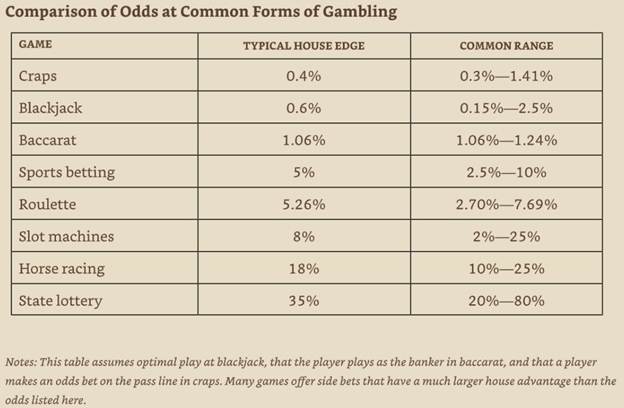
Historically, craps and blackjack offer the best odds if played optimally. This is partly because there is an element of skill with those table games (to be clear, I am neither endorsing those games nor advocating that you, dear reader, should play them). Sports betting traditionally provided the House with a 5% advantage, which was really about the sportsbook’s vig.
In the new era of online sports gambling, the House has figured out a number of new tools to increase their odds.
In-game betting. I’ve already mentioned this, but I want to make sure that you understand that people place bets under the high of being ahead or the stress of being behind on a bet. Logic and reason, whatever part they had in the pre-game bet, are more likely cast aside now. Advantage House.
Player prop bets. This is when you bet that LeBron James will score more than 31 points or that Patrick Mahomes will throw for more than 325 yards. You could bet on a lesser known player like Kike Hernandez to hit a double or Andrew Van Ginkel to get 1.5 sacks. The odds swing big-time to the House in these cases.
Limiting Sharps. Some companies will limit the bets of expert gamblers or not let them even bet at all. Some sharps have been blocked from apps because of their winnings, so they acted like problem gamblers (last minute bets on local teams, checking their account overnight to see the status of bets and payments) in order to be allowed to gamble. A couple of different executives of online sports books have basically said that they wanted customers who were looking to have fun rather than make money. Advantage House.
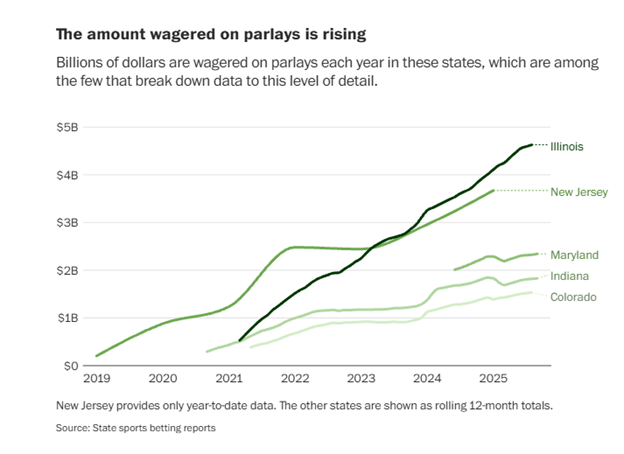
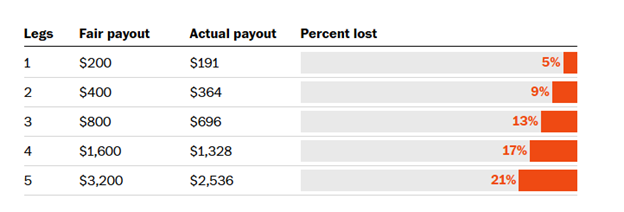
Parlays. This is the big-ticket item for the sports books now. The more legs on a bet, the worse the odds are for the gambler. Massive advantage House. The Washington Post published a great article about this in 2025. These two charts are from that piece and detail both the increase in numbers of parlay bets placed and their decreasing odds.
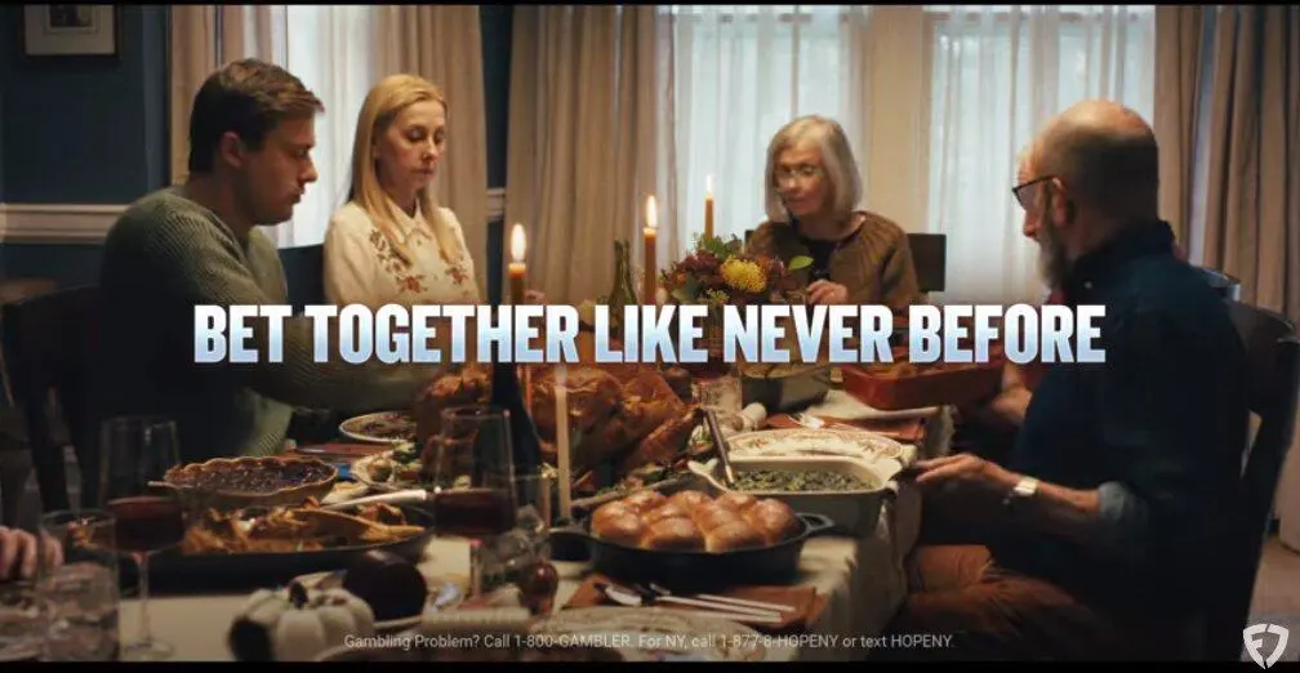
Running up to the 2025 Thanksgiving Holiday, Fan Duel ran an ad encouraging people to place a parlay bet with their families to “bet together like never before.”
What Problem Gambling Looks Like
Identifying a problem gambler early on can be difficult, far more so than identifying someone with an alcohol or drug problem. Because it can be placed from the phone, a person has no idea that someone else in their life might be placing bets. There is often no visible sign of addiction. People with a gambling problem often lie about it, thus keeping their friends and loved ones in the dark. Tragically, family members and romantic partners usually don’t learn about the gambling problem until there are massive financial problems or, to a lesser extent but far more serious, suicidal ideation.
About 90% of people who gamble are considered social gamblers. They gamble with other people, view it as entertainment, limit the amount of money they spend, do it for a short period of time and it has no impact on any other part of their life.
7-8% of gamblers fall into the problem gambling category. They gamble longer than they planned, lose more than they planned and begin to lie about their gambling. This is the stage where loss chasing begins; one returns to gambling to get the money back they lost, which usually leads to an ever-increasing cycle. At this stage, other life areas, such as work and relationships, start to be affected.
The remaining 2-3% fit into the DSM-V-TR classification of disordered gamblers. The term degenerate gambler was never professionally acceptable, but it was once widely used to describe this kind of behavior. Disordered gamblers often gamble by themselves. They sometimes gamble often and for long periods of time. They receive bailouts, typically from family (most often parents). Multiple life areas can be affected: school, work, family, friends, romance, health, hobbies and sometimes legal. Moreso than any other behavioral disorder (which includes substances, sex, shopping, eating), disordered gamblers have the highest rates of suicidal ideation, attempts and death by suicide.
Most people who gamble do not develop a gambling disorder. But because of the ubiquity of apps, more people than ever have access to gambling. And because they are doing it on the phone, people can gamble without anyone noticing.
Why Young Men are the Core Risk Group
Young men watch a lot of sports. They consume a lot of sports related content. They are more online than older men. They are, in summation, the group that is blanketed with the most advertising and sports gambling content.
A 2024 poll conducted by Fairleigh Dickinson University found that a quarter of men aged 18-30 bet on online sports and that 10% of all men in that age bracket meet the criteria for problem gambling.
Shortly after online sports gambling was legalized, COVID-19 hit. Online sports gambling took off in 2020 and 2021. Habits that were formed during lockdown have persisted and intensified.
A baseball player I treated from a Big Ten school told me in 2023 that “every guy I know who is my age that likes sports places bets on apps.”
A young soldier told me “it’s just so easy to make a parlay and throw in five bucks.”
A high school athlete told me during a counseling session that “if I want to watch a game I really don’t care about, I’ll put money on it to make it interesting.” If you are wondering how he was able to place bets, well, that’s a great question. He told me, “I set up an account using my older brother’s ID.”
A Rutgers social work junior told me in class last fall that “it’s horrible. All of my friends gamble and they talk about it all the time.”
BetMGM has put together an impressive line-up of athletes and celebrities to influence bettors, particularly young male ones. A personal note, I’m more disappointed in Barry Sanders than anyone else on BetMGM’s roster.

Effects on the Family
Back in 2017, I organized a training through the NJ Council on Compulsive Gambling for me and about a dozen of my friends, colleagues and students.
The council taught us that families can experience a loss of trust, financial insecurity, reputational costs, stress, isolation, resentment, conflict and neglect.
The training detailed that problem and disordered gamblers often disappear from family activities; experience changes in eating, sleeping and sex; borrow money and go into debt; take out money from their 401K and may engage in illegal money seeking behaviors. Family members may start to notice that items or money is missing.
I ended up taking a few referrals a week from the Council on Compulsive Gambling for about three years. One client was a woman in her late 40s who made about $80,000 a year but was in $750,000 of debt. She was referred to me after a suicide attempt. That was how her family found out she had a gambling problem.
Clinical Red Flags
There are some key risk factors for developing a sports gambling problem:
- other gambling family members
- early exposure to gambling
- young
- male
- impulsive
- plays sports
- watches sports
- listens/watches sports shows
- has peers who gamble
- has access to a smartphone
Some behavioral concerns for family members and professionals to be aware of:
- borrowing money
- hiding bank statements
- lying about betting
- betting during work or class
- chasing losses
- irritability when unable to bet
- betting to make games interesting
- repeated failed attempts to stop
- homicidal or suicidal language after losses
One college student who eventually showed up in treatment was able to get money from his parents for months by sending them fake Venmo requests from friends for meals that never existed.
A quick and easy problem gambling screening tool is the Lie/Bet, which was created in 1988:
1) Have you ever had to lie to people important to you about how much you have gambled?
2) Have you ever felt the need to bet more and more money?
What Helps
If you are concerned about someone’s gambling, you should tell them directly. Do not hem or haw. Point out behavior and consequences. Then suggest individual therapy with someone who has a history with treating disordered gamblers. And you should attend at least six Gam-Anon meetings.
For individuals with a gambling problem, I recommend the following:
- individual therapy (in NJ, contact 800Gambler, in NY, contact the Council)
- Gambler’s Anonymous meetings
- delete all gambling apps from phone
- self-exclusion
- allow someone to monitor their bank account and occasionally check their phone for apps
- replace gambling activities with something else
- My Name is Craig podcast
- for individuals experiencing suicidal ideation, please call 988
The best behaviors a parent or loved one can do to either prevent a gambling problem from developing or helping their loved one once it is present include:
- do not gamble
- talk about gambling risks
- monitor and limit screen time
- monitor bank accounts and money access
- seek professional help
When I was going through my formal gambling counseling training, I had to get monthly supervision. During one group session, some counselors were talking about how their clients had to give up sports. I asked the clinical supervisor how common it was for someone with a sports gambling problem to be able to continue watching sports without it leading to relapse. She responded, “pretty rare.”
I’m a massive sports fan. I cannot imagine a life without NFL Sundays and the daily rhythm of the baseball season throughout the spring and summer and early fall. There was a 30-something accountant in the early stages of a gambling problem whom I was treating a few years ago. He was a huge Mets fan. I told him that if he kept on gambling and it got worse, that he’d probably have to give up baseball. This bothered him so much that it was the fuel to motivate him to stop altogether and follow through on treatment recommendations.
This is Already Here
Online Gambling is here. It’s growing. It will be in more states soon. Our culture has been gamified, as video games are full of loot boxes and online gambling has expanded into other areas like natural disasters, politics and war. Polymarket and Kalshi are gigantic and not well-regulated.
Online sports gambling is:
- already normalized
- more ads will increase gambling
- it’s hidden, and is often only discovered after serious harm
- there is a strong co-occurrence with substance misuse
- strong links to suicidal ideation
In the states where online gambling has been legalized, independent studies have found that people have higher rates of missed credit payments, lower credit scores and higher rates of bankruptcy. This is affecting more than just the gamblers; it is causing problems for their families and society as well.
I would be remiss if I didn’t point the reader to this article from the April 2026 Atlantic. In it, McKay Coppins wrote that “as a society, we are making an enormously risky bet: that we can reap the rewards of a runaway gambling industry without paying any price; that, unlike every civilization that came before us, we can beat the house.”
Many of the world’s major religions prohibit or look down upon gambling, including Judaism, some sects of Christianity, Buddhism, Islam, and Hinduism. Ancient people were able to recognize the problems associated with gambling and smacked religious prohibitions on it. 21st Century Americans have embraced it. Politicians saw it as a new source of revenue, companies and investors love the profits and customers, well, it’s just so easy because it’s on their phone. To so many people, it seemed like such a good idea.
We’ll be cleaning up this mess for decades.
Disclosure: A large language model was used for copy editing in accordance with my AI Use & Writing Standards. All writing, arguments, interpretations, sources and conclusions are my own.